

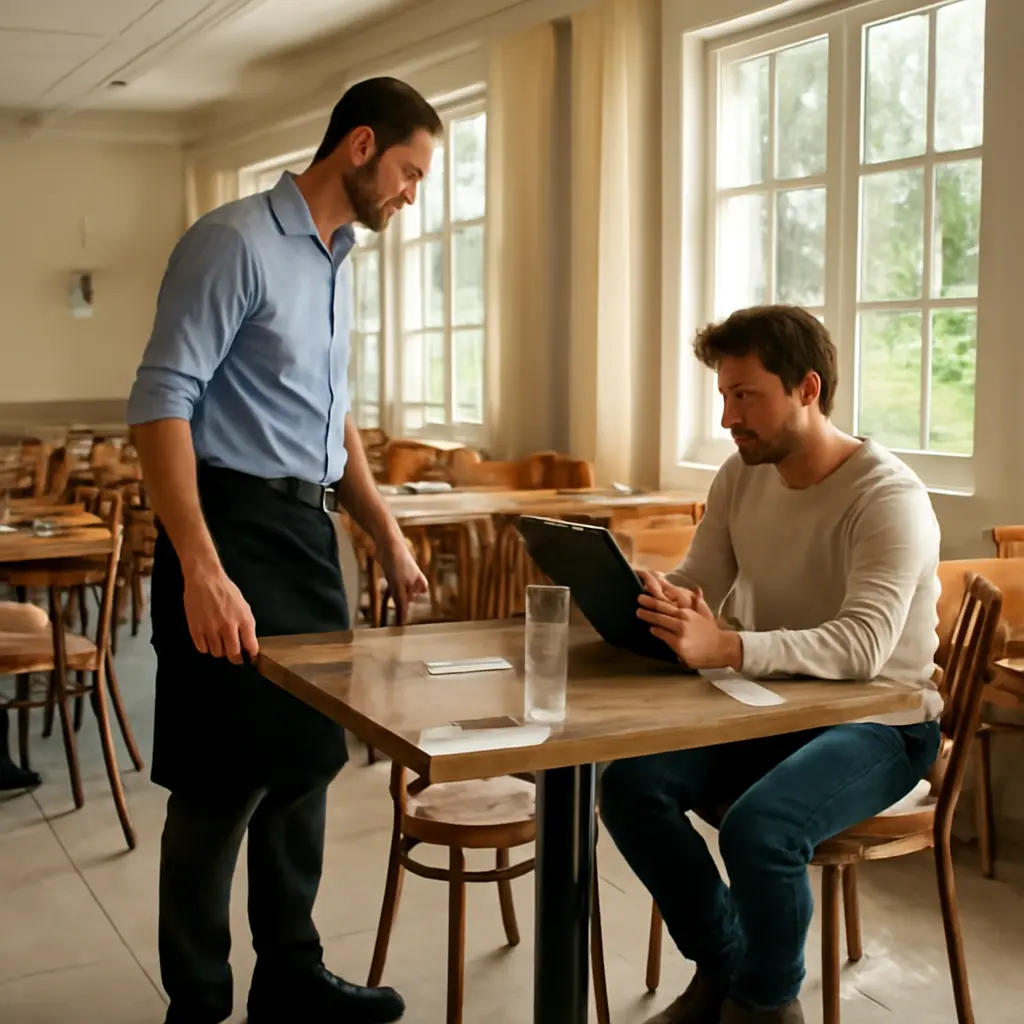
Restaurant hospitality is the way a restaurant makes guests feel welcomed, understood, and cared for throughout their visit—not simply the service involved in taking orders and delivering meals. Today, restaurants are reshaping hospitality through more personalized interactions, digital convenience, flexible service models, and renewed attention to employee experience. The shift matters in an industry where the National Restaurant Association reported that U.S. restaurant and foodservice sales were projected to reach $1.1 trillion in 2024, while operators continued to face labor and cost pressures. Together, these forces are changing what guests expect and how restaurants deliver a memorable experience.
Personalized Service and Restaurant Hospitality
Personalized service means adapting interactions and offerings to a guest’s preferences, needs, and circumstances. The National Restaurant Association’s industry research highlights personalization and technology as important areas of restaurant investment, while consumer surveys regularly identify hospitality and service as key parts of the dining experience. Personalization can include remembering a returning guest’s preferences, accommodating dietary requirements, or making recommendations that fit a customer’s budget and tastes.
Recognition and Guest Preferences
Recognition is the practice of acknowledging guests as individuals rather than treating every visit as interchangeable. Loyalty programs and reservation systems can help restaurants retain information such as preferred seating or past orders, but staff judgment remains essential: a remembered preference should feel helpful, not intrusive. A restaurant might note a regular guest’s preference for a quiet table while still asking whether that preference applies on the current visit.
Inclusive and Flexible Hospitality
Inclusive hospitality makes the dining experience accessible and respectful across different abilities, cultures, ages, and dietary needs. It includes clear menu information, responsive allergy communication, accessible facilities, and a willingness to adjust service when practical. The U.S. Food and Drug Administration identifies nine major food allergens, including milk, eggs, fish, shellfish, tree nuts, peanuts, wheat, soybeans, and sesame, underscoring why accurate ingredient information and careful communication are important parts of guest care.
Personalization depends on understanding guests, but the experience increasingly begins before they arrive. That makes digital tools and service design another important part of contemporary hospitality.
Digital Convenience and Restaurant Hospitality
Digital convenience in restaurants is the use of technology to make discovery, ordering, payment, and follow-up easier for guests. It includes online reservations, mobile ordering, contactless payment, digital menus, and loyalty apps. The National Restaurant Association has documented operators’ continuing interest in technology as a way to improve efficiency and meet changing customer expectations. These tools can reduce friction, but they work best when they support—not replace—human hospitality.
Ordering, Reservations, and Payment
Digital ordering and reservation systems let guests handle routine steps on their own schedules. A mobile order can be convenient for a quick lunch, while an online reservation can help a restaurant manage seating and reduce uncertainty for guests. The U.S. Census Bureau’s quarterly e-commerce reports show that online purchasing is an established part of consumer commerce, although restaurant-specific ordering patterns vary by market and service format. Restaurants should keep digital interfaces clear and provide an easy way to get staff assistance.
Technology with a Human Touch
Technology enhances hospitality when it gives employees more time to notice and respond to guests. For example, a system that flags an allergy note can help a team communicate a request across the kitchen and dining room. By contrast, an automated process that leaves a guest unable to resolve a problem can make service feel impersonal. Restaurants can evaluate digital tools by asking whether they improve accuracy, reduce unnecessary waiting, and preserve access to a real person when needed.
Digital systems can make service faster and more consistent, but hospitality also depends on how restaurants structure the meal itself. The growth of takeout, delivery, and hybrid dining has extended the guest experience beyond the dining room.
Omnichannel Service and Restaurant Hospitality
Omnichannel service is the coordinated delivery of a consistent customer experience across multiple ways of ordering and dining, such as eating in, takeout, curbside pickup, and delivery. The U.S. Department of Agriculture’s Economic Research Service has tracked the long-term expansion of food-away-from-home spending, while the pandemic accelerated adoption of off-premises restaurant service. For restaurants, hospitality now includes the packaging, timing, accuracy, and communication that shape a meal consumed elsewhere.
Dine-In, Takeout, and Delivery
Each service format creates different hospitality needs. In a dining room, attention to pacing and atmosphere matters; for pickup, clear instructions and accurate handoff matter; in delivery, packaging and realistic arrival estimates help protect the meal experience. National Restaurant Association reporting has identified off-premises dining as a major part of the modern restaurant business, with many consumers continuing to use takeout and delivery. The specific mix varies by restaurant type and location, so operators need to design service around their own guests and menus.
Consistency Across Channels
Consistency means that a restaurant’s core promises—food quality, accurate information, and respectful service—hold across ordering channels. A practical example is a menu that displays the same prices, ingredients, and availability online as in the restaurant. Restaurants can also use feedback and order data to identify recurring problems, such as missing items or delays at peak times, then adjust staffing, packaging, or workflow accordingly.
Delivering the same promise through multiple channels requires reliable teams and processes. As a result, the employee experience has become closely connected to the guest experience.
Employee Experience and Restaurant Hospitality
Employee experience is the set of conditions that shape how restaurant workers perform and feel at work, including training, scheduling, tools, safety, and workplace culture. The U.S. Bureau of Labor Statistics identifies food preparation and serving occupations as a large part of the U.S. workforce, and restaurants have long faced challenges related to recruitment and retention. When employees have clear expectations and the support to do their jobs, they are better positioned to provide attentive, consistent guest service.
Training and Service Recovery
Hospitality training equips employees to communicate clearly, anticipate needs, and respond constructively when service falls short. Service recovery—the process of addressing a problem and restoring a guest’s confidence—may involve listening, apologizing, correcting an order, or involving a manager. Effective recovery guidelines give staff enough authority to resolve routine issues while setting clear boundaries for more serious concerns.
Workplace Culture and Operational Support
A supportive workplace culture helps employees deliver hospitality without relying on individual effort alone. Predictable scheduling, adequate staffing, functional equipment, and respectful leadership all affect service capacity. The National Restaurant Association’s annual industry outlooks have repeatedly identified labor availability and operating costs as significant operator concerns. Investing in training and workable systems can therefore support both employee retention and the consistency guests experience.
When teams are supported, they can carry out the personal, digital, and cross-channel practices that define modern hospitality. Restaurants can make this change more effective by measuring outcomes rather than adopting new tools or policies for their own sake.
Measuring Restaurant Hospitality
Measuring hospitality means gathering evidence about how guests experience service and using it to improve operations. Useful indicators include customer satisfaction, repeat visits, complaint resolution, order accuracy, wait times, and employee retention. No single metric captures the whole experience: a fast meal may still feel impersonal, while a warm interaction may not compensate for repeated order errors.
Feedback and Guest Satisfaction
Guest feedback can come from surveys, online reviews, direct conversations, or loyalty-program responses. Restaurants can look for patterns rather than reacting to every comment in isolation—for example, repeated mentions of confusing menus or slow pickup handoffs. Feedback should be interpreted alongside operational data and handled with care, particularly when it contains personal information.
Balancing Speed, Quality, and Connection
A balanced hospitality scorecard considers efficiency and human connection together. Restaurants might track order accuracy and average wait time alongside satisfaction and repeat-visit rates. Comparing results across dine-in, takeout, and delivery can reveal where service needs differ. A chart of wait time and satisfaction by channel, for example, could show whether a faster process is actually improving the guest experience or merely moving orders through more quickly.
Conclusion
Restaurant hospitality is expanding beyond table service into a coordinated experience shaped by personalized attention, digital convenience, omnichannel consistency, and employee support. The industry’s scale and continuing labor and operating pressures make these changes consequential for both guests and operators. Restaurants can respond by using technology to remove friction, designing service around different guest needs, equipping employees to resolve problems, and tracking outcomes across channels. Operators can start by reviewing customer feedback and service data, then testing small improvements before expanding them across the business.
Sources: National Restaurant Association, 2024 State of the Restaurant Industry Report, https://restaurant.org/research-and-media/research/research-reports/state-of-the-restaurant-industry/; U.S. Food and Drug Administration, Food Allergies, https://www.fda.gov/food/food-labeling-nutrition/food-allergies; U.S. Census Bureau, Quarterly Retail E-Commerce Sales, https://www.census.gov/retail/mrts/www/data/pdf/ec_current.pdf; U.S. Department of Agriculture, Economic Research Service, Food Expenditure Series, https://www.ers.usda.gov/data-products/food-expenditure-series/; U.S. Bureau of Labor Statistics, Occupational Outlook Handbook: Food and Beverage Serving and Related Workers, https://www.bls.gov/ooh/food-preparation-and-serving/food-and-beverage-serving-and-related-workers.htm