

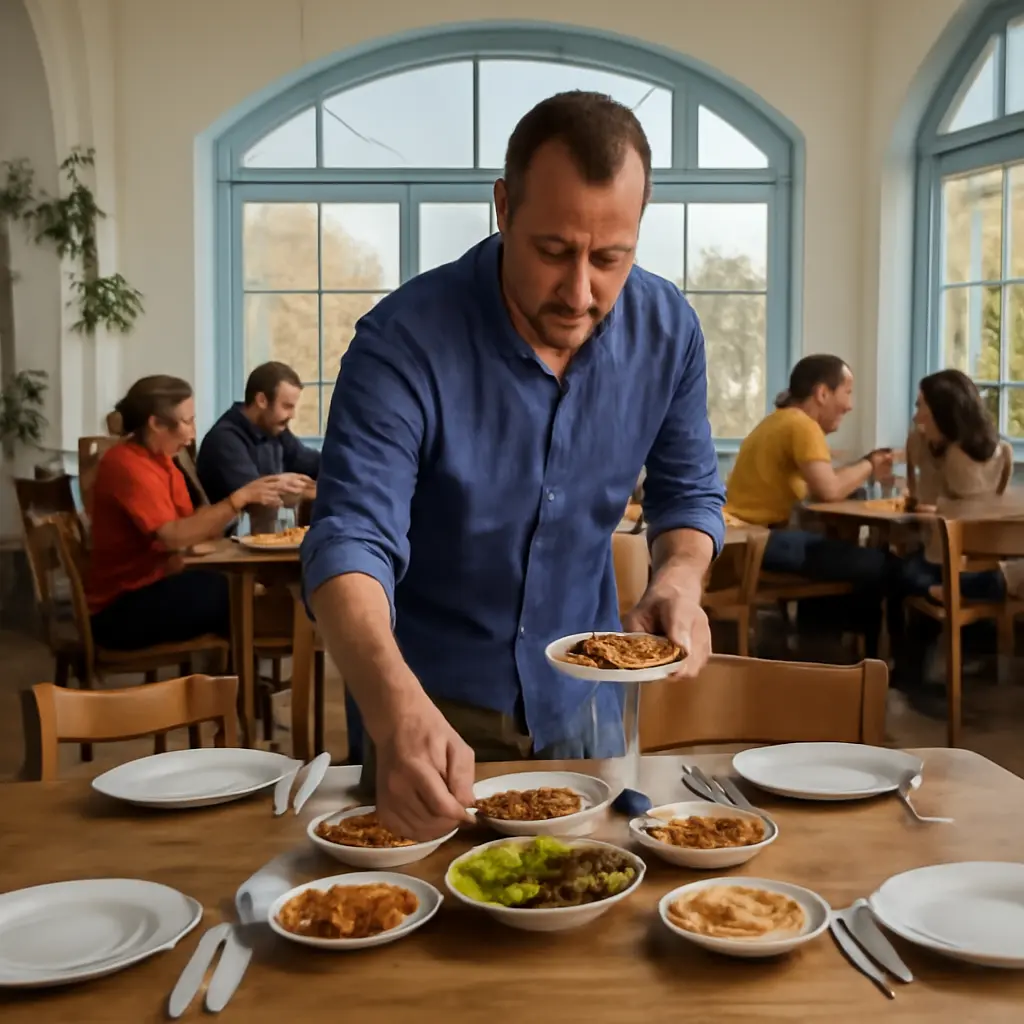
A mezze platter is a selection of small dishes served together for sharing, while an individual entrée is a prepared main course intended for one diner. For groups with mixed appetites, mezze often offers more choice and makes it easier to sample different foods; individual entrées provide clearer portions and a more predictable meal. The best format depends on appetite, dietary needs, price, and how much diners value variety. This comparison looks at how each format works, what the evidence says about portions and choice, and how to plan a meal that suits a mixed group.
Mezze Platters and Individual Entrées: How the Formats Differ
Mezze is a style of serving rather than one fixed recipe: a meal may include several small dishes, such as dips, vegetables, breads, grains, or prepared meats, placed on the table for people to share. An entrée is generally a single main dish ordered or served to one person. In the United States, “entrée” usually means the main course, although the word can mean a starter in some other countries.
The distinction matters when appetites differ. A shared spread lets diners choose how much of each item to eat, while separate plates make portions and dietary restrictions easier to manage. Neither format guarantees a lower cost or healthier meal: ingredients, restaurant pricing, portion sizes, and the number of dishes determine the result. The Food and Agriculture Organization describes food security as access to sufficient, safe, and nutritious food; in a restaurant setting, offering useful choices can help accommodate different needs, but it does not replace clear ingredient and allergen information.
Mezze as a flexible shared meal
A mezze platter or spread combines small portions so diners can assemble a meal from several components. Common examples include hummus, labneh, olives, salads, grilled vegetables, pita, and kebabs, though menus and traditions vary across the Eastern Mediterranean and neighboring regions. The format is especially useful when diners want to taste broadly or have different appetites: one person can focus on vegetables and dips, while another adds bread or a more substantial dish.
Sharing also creates practical questions. A group needs enough food overall, and diners may need separate serving utensils to reduce allergen cross-contact or accommodate religious and dietary requirements. A platter can appear abundant yet leave a hungry diner short if its portions are designed as appetizers rather than a full meal. Asking the restaurant whether the spread is intended as a meal—and how many people it serves—is more reliable than judging by the platter’s name.
Individual entrées as predictable portions
An individual entrée is a main dish prepared for one diner, often with a defined protein, starch, and vegetable or sauce. Its main advantages are portion clarity and personal control: guests can choose a dish that fits their appetite, avoid ingredients they do not eat, and receive their food without negotiating shared portions. Separate plates can be particularly helpful for people with allergies, sensory preferences, or strict dietary practices, provided the restaurant can confirm preparation details.
The trade-off is reduced flexibility after ordering. A diner who wants only a small amount may receive more food than desired, while someone with a larger appetite may need an extra side. Entrées also make it harder for a group to sample several preparations unless guests agree to share. Portion size is not standardized across restaurants, so menu descriptions and staff guidance matter more than the label “entrée.”
Mezze Platters Compare Favorably on Choice, but Not Every Need
The clearest difference is the way choice is distributed. A platter spreads choice across the table; an entrée concentrates it on one plate. Research on food choice suggests that variety can encourage people to eat more, a phenomenon commonly called the variety effect. In a review published in Psychological Bulletin, Barbara Rolls and colleagues examined how food variety relates to intake and satiety. This finding is relevant to mezze, where multiple colors, textures, and flavors may prompt additional tasting—but it does not mean every diner will eat more, or that shared meals are inherently less healthy.
Variety and appetite control
Variety means the number and difference of available foods; appetite control is a person’s ability to stop eating in response to fullness and preference. Mezze can serve both goals: diners can take small tastes and stop when satisfied, but a broad spread may also invite repeated sampling. For a group with different appetites, agree on the number of dishes and order a mix of lighter and more filling items rather than assuming that many small plates will automatically amount to a balanced meal.
The U.S. Dietary Guidelines for Americans 2020–2025 recommend nutrient-dense choices across food groups and advise limiting added sugars, saturated fat, and sodium. These principles can guide either format. A mezze order can emphasize vegetables, beans, and whole grains where available; an entrée can pair a suitable main with vegetables and an appropriate side. Menu composition, not the serving style alone, determines how closely a meal fits those recommendations.
Portion planning and food waste
Portion planning is the process of matching the quantity ordered to the diners’ needs. Entrées make individual servings visible, while mezze requires the group to estimate total demand across dishes. The U.S. Environmental Protection Agency reports that food is the largest category of material placed in municipal landfills, making avoidable leftovers a wider environmental concern. That national statistic does not show that one restaurant format causes more waste than another, but it supports ordering carefully, sharing leftovers safely, and asking about portion sizes before adding dishes.
A practical approach is to start with a moderate spread and add food if needed, when the restaurant permits it. For entrées, diners can ask whether sides are included and whether portions are large enough to share. The comparison is not simply “shared means less waste” or “individual means less waste”: accurate estimates and the option to take leftovers home are more decisive.
Choosing Between Mezze and Entrées for Mixed Appetites
The right format depends on the group’s constraints as much as its appetite. A mixed group may include someone seeking a light meal, someone who needs a filling portion, a vegetarian, and a diner avoiding a particular ingredient. Before ordering, consider how much customization the kitchen can offer, whether shared serving is comfortable, and whether the menu clearly identifies ingredients.
When a shared platter is the better fit
Choose mezze when the group enjoys tasting together, appetite differences are moderate, and the menu offers enough variety to build satisfying combinations. It can also work well for a casual gathering where conversation and sampling are part of the experience. To make the spread substantial, include filling components such as beans, grains, bread, or a suitable protein alongside dips and vegetables.
- Ask how many people the platter is intended to serve and whether it is a meal or an appetizer selection.
- Check for vegetarian, vegan, and allergen-aware options before ordering.
- Request separate utensils for shared dishes when appropriate.
- Add dishes in stages if the restaurant allows it, rather than ordering more than the group can use.
When individual entrées are the better fit
Choose entrées when diners need distinct portions, have substantial differences in appetite, or require more control over ingredients. This format is also useful when one or more guests have an allergy or a strict dietary restriction, although an individual plate is not automatically safe: the kitchen must still prevent cross-contact and verify ingredients. A shared side or starter can add variety without making the entire meal communal.
- Ask about portion size, included sides, sauces, and substitutions.
- Tell staff about allergies and ask how the kitchen handles cross-contact.
- Consider splitting a large entrée or adding a small side for a diner with a bigger appetite.
- Use a shared starter for variety while keeping main dishes separate.
A hybrid order for groups with wide-ranging needs
A hybrid meal combines a few shared mezze dishes with individual mains. It gives the table variety without requiring everyone to eat the same way. For example, a group might share hummus, salad, and grilled vegetables, then order separate entrées for diners who want a full portion or need a particular preparation. This approach can be adjusted to budget and appetite, but diners should check whether shared starters add substantially to the total bill.
For a simple planning example, a party of four could select two or three shared items, then decide whether each person still wants a main after seeing the portions or consulting the server. The exact number is not a universal serving rule; restaurant portion sizes vary. A menu photo or server recommendation can help, but asking directly remains the most dependable way to estimate.
Conclusion: Match the Meal Format to the Group
Mezze platters distribute variety across the table and let diners choose among small dishes; individual entrées offer more direct control over portions and ingredients. Variety may encourage extra tasting, while portion planning and clear menu information can help groups avoid unwanted leftovers or unmet appetites. For many mixed groups, a hybrid order—shared dishes plus selected individual mains—balances both benefits. Before ordering, ask about serving sizes, ingredients, allergens, and whether a platter is meant to be a complete meal. Those practical checks make the format work for the people at the table.
Sources: Food and Agriculture Organization of the United Nations, An Introduction to the Basic Concepts of Food Security, https://www.fao.org/4/al936e/al936e00.pdf; Rolls, Barbara J., Emmett P. van Duijvenvoorde, and Edward A. Rowe, “Variety in the Diet Enhances Intake in a Meal and Contributes to the Development of Obesity in the Rat,” Psychological Bulletin, 1983, https://doi.org/10.1037/0033-2909.93.2.307; U.S. Department of Agriculture and U.S. Department of Health and Human Services, Dietary Guidelines for Americans, 2020–2025, https://www.dietaryguidelines.gov/; U.S. Environmental Protection Agency, From Farm to Kitchen: The Environmental Impacts of U.S. Food Waste, https://www.epa.gov/land-research/farm-kitchen-environmental-impacts-us-food-waste.