

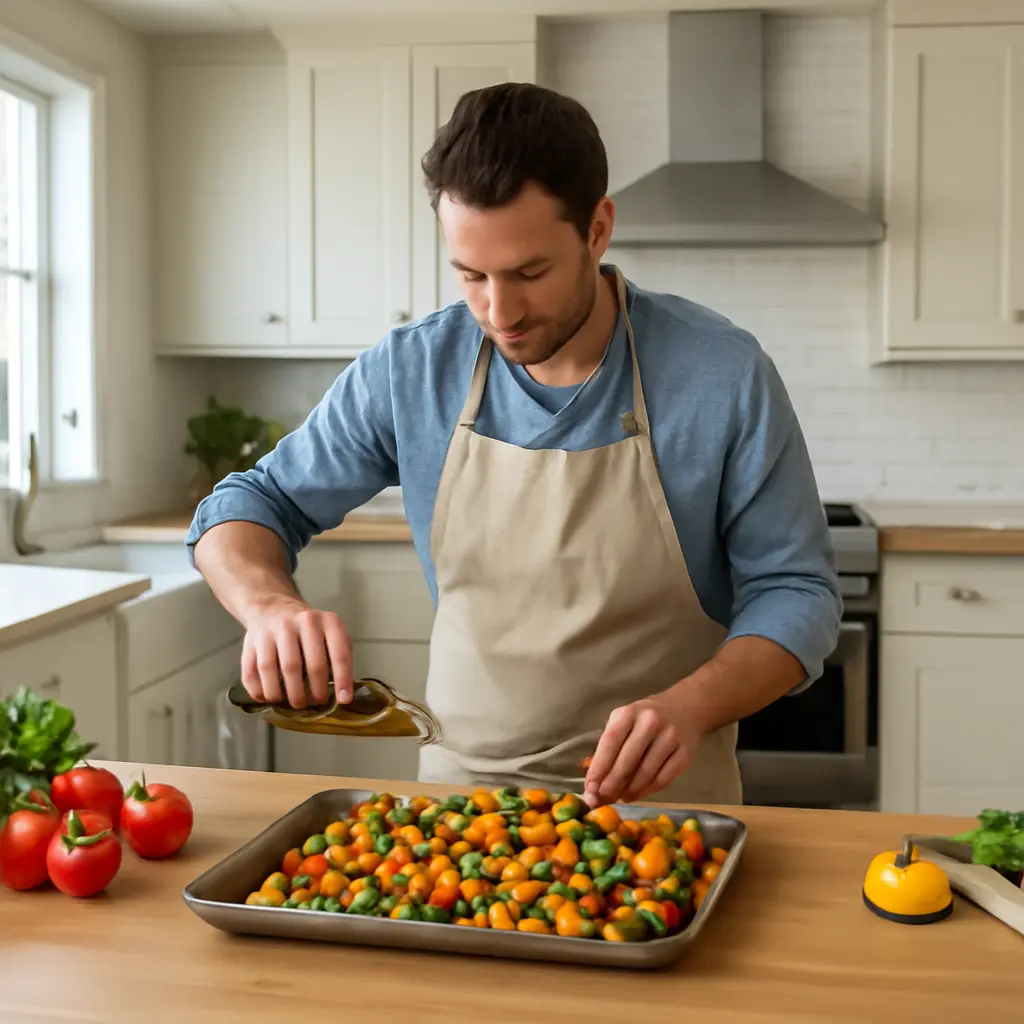
Olive oil is the fruit juice pressed from olives, and its flavor, aroma, and ability to carry fat-soluble flavors make it a simple way to turn everyday vegetables into craveable starters. A drizzle can help vegetables brown, while a finishing splash adds peppery, fruity, or grassy notes; those effects depend on the oil, the cooking method, and the vegetable. The Mediterranean pattern of eating—which commonly features vegetables and olive oil—has also been studied for health outcomes, though a dish’s benefits depend on its full ingredients and portion size. Here’s how olive oil contributes to roasting, sautéing, seasoning, and serving, with practical examples and food-safety context.
Olive oil flavor transforms vegetables through aroma, texture, and contrast
Olive oil’s culinary role is not just “adding richness.” The North American Olive Oil Association describes extra-virgin olive oil as oil obtained from olives by mechanical means, without refining, and meeting chemical and sensory standards. In the kitchen, its flavor compounds and mouthfeel can round out bitterness, carry aromatics, and make crisp or tender vegetables feel more complete. The result is especially useful for starters, where a few bites need to deliver clear flavor quickly.
Extra-virgin olive oil brings distinctive finishing flavor
Extra-virgin olive oil is the least-processed grade commonly sold for everyday cooking. Its flavor can range from mild and buttery to green, bitter, and peppery, influenced by olive variety, growing conditions, harvest timing, and freshness. The International Olive Council’s sensory vocabulary includes attributes such as fruitiness, bitterness, and pungency. These are not defects: a peppery finish can enliven sweet vegetables such as carrots, while a softer oil can complement delicate zucchini or mushrooms.
For a starter, reserve a little oil for the plate rather than using every drop in the pan. A final drizzle over warm vegetables releases aroma as it meets the heat, while lemon juice, vinegar, herbs, or toasted nuts provide contrast. Since olive oil itself supplies about 9 calories per gram, a measured drizzle adds flavor efficiently without making the vegetables feel greasy.
Oil helps seasoning cling and balances vegetable flavors
A thin coating of oil helps salt, spices, and chopped herbs adhere to vegetable surfaces. It also creates a sensation of fullness and can soften the sharp edge of bitter or pungent ingredients. For example, olive oil and lemon can brighten roasted broccoli; garlic and oil can make sautéed greens feel savory; and cumin or smoked paprika can give cauliflower a warmer, more substantial character.
Use acidity deliberately. Lemon juice or vinegar cuts through oil’s richness, while a small amount of honey or another sweet ingredient can balance bitterness in chicories or Brussels sprouts. This interplay of fat, acidity, salt, and heat is why a modest number of ingredients can make a vegetable starter taste composed rather than plain.
Cooking with olive oil changes vegetable texture and browning
Flavor is only part of olive oil’s effect: it also influences heat transfer and surface texture. The U.S. Department of Agriculture’s FoodData Central lists olive oil as essentially all fat, so it coats food rather than contributing water. A light coating promotes contact with hot pans or oven surfaces, but it cannot compensate for overcrowding, excess moisture, or inadequate heat. Match the method to the vegetable and give steam a way to escape.
Roasting creates browned edges and concentrated sweetness
Roasting cooks vegetables in dry oven heat, encouraging surface browning and concentrating flavor as moisture evaporates. Toss broccoli florets, cauliflower, carrots, or halved Brussels sprouts with enough olive oil to lightly coat them, then spread them in a single layer. Crowding traps steam and tends to soften vegetables instead of browning them. Turn or shake the tray during cooking for more even color, and finish with a squeeze of citrus or a spoonful of yogurt-based sauce.
A practical starter is a tray of roasted carrots with extra-virgin olive oil, salt, cumin, and lemon. The carrots’ natural sweetness contrasts with the oil’s fruitiness and the spice’s warmth. Serve them warm or at room temperature with herbs, toasted seeds, or a dip. Cooking times vary with cut size and oven performance, so use tenderness and browning—not the clock alone—as guides.
Sautéing gives quick-cooking vegetables a glossy finish
Sautéing cooks vegetables quickly in a shallow layer of fat over direct heat. Olive oil can carry garlic, chili flakes, or other aromatics into green beans, mushrooms, spinach, and sliced zucchini. Add ingredients in stages: firm vegetables first, delicate leaves later. This keeps tender ingredients from becoming waterlogged while harder pieces finish cooking.
For a simple starter, sauté mushrooms until their released moisture evaporates and their surfaces begin to brown, then add garlic near the end so it does not scorch. Finish with parsley and a small splash of vinegar. Olive oil’s smoke point varies with grade, freshness, and other factors; avoid letting the oil smoke, which can produce harsh flavors. For high-heat cooking, use a suitable pan, preheat it sensibly, and lower the heat if the oil begins to smoke.
Grilling and searing add char, while a finishing drizzle adds aroma
Grilling and searing produce direct-contact browning and smoky notes. Brush eggplant, peppers, asparagus, or thick onion slices lightly with oil to reduce sticking and help seasonings adhere. Turn vegetables as they soften and develop char, then finish with fresh olive oil, herbs, and acid. The finishing oil is best added after cooking when its fresh aroma is part of the intended flavor.
For a shareable plate, grill strips of eggplant until tender, then top with a mixture of olive oil, lemon, chopped parsley, and a little garlic. Serve with bread or beans for a more filling appetizer. Keep raw and cooked ingredients separate, and follow standard food-safety practices for washing produce and cleaning preparation surfaces.
Vegetable starters pair olive oil with texture and contrast
A craveable starter usually combines more than one texture or flavor. Olive oil can unite crisp, tender, creamy, and crunchy components, but the best pairings depend on the vegetable’s natural character. Sweet roots welcome sharper or spicier accents; bitter greens benefit from acidity and salt; and mild vegetables can take on bolder herbs or sauces.
Crisp vegetables benefit from dips, herbs, and a little richness
Raw vegetables such as radishes, fennel, cucumbers, and sweet peppers retain a crisp bite that contrasts with an oil-rich dip. Whisk olive oil into hummus, yogurt, or a bean purée, or serve a small dish of oil with herbs and vinegar for dipping. Because raw vegetables do not absorb oil in the same way as cooked surfaces, use the oil as part of a dip or dressing rather than pouring on a heavy coating.
Roasted and marinated vegetables suit make-ahead serving
Roasted peppers, artichokes, and eggplant can be served warm or chilled with olive oil, herbs, and an acidic ingredient. This makes them useful for entertaining: prepare the vegetables ahead, refrigerate promptly, and bring them out shortly before serving. The USDA recommends keeping perishable foods out of the temperature danger zone; do not leave cooked vegetables at room temperature for more than two hours, or one hour when the temperature is above 90°F (32°C).
For a simple make-ahead plate, combine roasted peppers with olive oil, red-wine vinegar, capers, and parsley. The oil carries the caper and herb flavors across the pepper’s surface, while the vinegar keeps the dish lively. Store leftovers covered in the refrigerator and use clean utensils when serving.
A small amount of oil can support a satisfying eating pattern
Olive oil is energy-dense, so portion size matters, but it can fit into vegetable-forward meals. The PREDIMED randomized trial, published in the New England Journal of Medicine, studied a Mediterranean diet supplemented with extra-virgin olive oil or nuts among people at high cardiovascular risk. The researchers reported fewer major cardiovascular events in the Mediterranean-diet groups than in the control group. This was evidence about an overall dietary pattern and population—not proof that olive oil alone prevents disease or that any individual appetizer has a specific health effect.
For practical cooking, aim for enough oil to coat or season vegetables, then build flavor with herbs, spices, citrus, and texture. This approach preserves olive oil’s contribution while allowing vegetables to remain the focus.
Conclusion: olive oil makes simple vegetables inviting starters
Olive oil transforms humble vegetables through several connected effects: extra-virgin oil contributes distinctive aroma and flavor; a light coating helps browning and seasoning; and a finishing drizzle adds freshness and richness. Roasting, sautéing, grilling, dipping, and marinating each offer a different route to a compelling starter. Pair the oil with acidity, herbs, spice, and contrasting textures, while keeping portions and food safety in mind. Try one vegetable with two different oils or cooking methods, note which combination you prefer, and use that tasting as a starting point for building your own vegetable-first appetizer repertoire.
Sources: North American Olive Oil Association, Olive Oil 101, https://www.aboutoliveoil.org/olive-oil-101; International Olive Council, Sensory Analysis of Olive Oil, https://www.internationaloliveoil.org/; U.S. Department of Agriculture, FoodData Central, Olive Oil, https://fdc.nal.usda.gov/; U.S. Department of Agriculture, Food Safety and Inspection Service, Danger Zone (40°F–140°F), https://www.fsis.usda.gov/food-safety/safe-food-handling-and-preparation/food-safety-basics/danger-zone-40f-140f; Estruch, R. et al., Primary Prevention of Cardiovascular Disease with a Mediterranean Diet Supplemented with Extra-Virgin Olive Oil or Nuts, New England Journal of Medicine, 2018, https://www.nejm.org/doi/full/10.1056/NEJMoa1800389.