

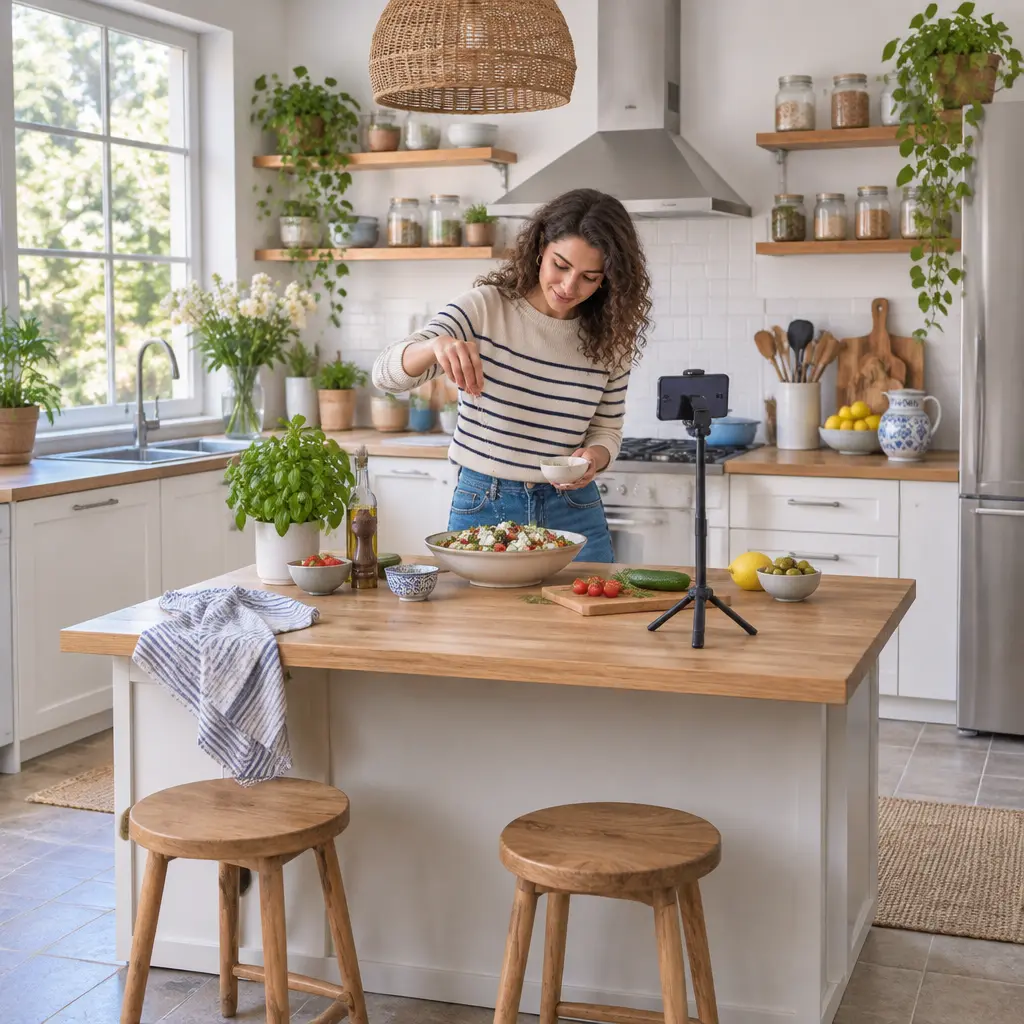
TikTok and social media are changing Mediterranean food by turning regional recipes into short-form entertainment, discovery tools and commercial trends. Mediterranean cuisine is not one uniform diet: it encompasses diverse food traditions across countries bordering the Mediterranean Sea, while the often-cited Mediterranean diet is a dietary pattern associated with foods such as vegetables, legumes, grains, olive oil and fish. Social platforms can make these foods more visible and approachable, but virality can also flatten regional differences or detach recipes from their cultural context. This article examines how social media drives discovery, reshapes recipes and food businesses, and affects health claims and cultural representation—developments with particular reach given that TikTok reported more than one billion monthly active users worldwide in 2021.
Social media accelerates Mediterranean food discovery
Social-media food discovery is the process through which users encounter dishes, ingredients and cooking techniques through posts, videos, recommendations and creator communities. TikTok’s defining format—brief, vertically framed videos distributed through a personalized recommendation feed—makes it possible for a recipe to travel far beyond its place of origin. The platform reported that it had more than one billion monthly active users globally in September 2021, a measure of potential reach rather than proof that every trend reaches every audience.
Mediterranean food is especially suited to visual storytelling: olive oil poured over a dish, herbs scattered across a salad, or bread dipped into a colorful spread can communicate texture and appeal quickly. Instagram, YouTube and Pinterest also contribute through recipe reels, longer demonstrations, saved collections and step-by-step images. Together, these formats connect home cooks with restaurant dishes, pantry ingredients and regional cooking traditions.
Short-form recipe videos
A short-form recipe video compresses preparation into a sequence of visual cues—ingredients, actions and a finished dish. Creators may use captions, voice-over, time-lapse editing and close-up shots to make recipes such as hummus, shakshuka, Greek salad or baked feta pasta seem easy to reproduce. The format can lower the barrier to trying unfamiliar foods, although rapid edits may omit quantities, cooking temperatures, substitutions or food-safety details.
TikTok’s 2021 “Year on TikTok” materials highlighted the viral baked feta pasta trend, which was widely reported as driving interest in feta and contributing to supermarket demand in some markets. The example shows how a recipe can operate as both entertainment and a prompt to shop. It also illustrates a limitation: a viral dish may be described as “Mediterranean” even when it is a modern internet adaptation rather than a representative traditional recipe.
Recommendation feeds and food discovery
Recommendation feeds rank and distribute content according to platform-specific signals, which can include viewing behavior and user interactions. Their practical effect is that a person does not need to follow a chef or search for a dish to encounter it. A video about tahini, preserved lemons or lentil soup can surface alongside unrelated entertainment, introducing ingredients to viewers who might not otherwise seek them out.
This discovery mechanism helps niche cuisines find new audiences, but engagement is not the same as accuracy or cultural authority. Users can check a creator’s background, compare recipes from multiple sources and look for explanations of a dish’s regional context before treating a popular clip as definitive.
Social media reshapes Mediterranean recipes and food businesses
Recipe adaptation is the adjustment of ingredients, preparation or presentation to fit a cook’s preferences, available products, dietary needs or online format. Social media amplifies this everyday practice: creators develop variations for one-pan cooking, vegetarian diets, budget shopping or visually distinctive presentation. The result can make Mediterranean-inspired cooking accessible, while also creating simplified versions that should not be confused with the full range of regional cuisines.
The commercial effects extend beyond individual kitchens. Restaurants, packaged-food companies, cookbook authors and independent creators use social platforms to demonstrate products and build audiences. The National Restaurant Association’s 2024 industry report estimated U.S. restaurant and foodservice sales at $1.1 trillion, underscoring the scale of the broader market in which social discovery can influence consumer attention. That estimate describes the industry, not sales attributable to TikTok or Mediterranean food specifically.
Viral adaptations and ingredient trends
A viral adaptation is a version of a dish that gains rapid online circulation, often because it is visually distinctive, easy to explain or simple to reproduce. Baked feta pasta became a high-profile example: its basic method—baking feta and tomatoes, then combining them with pasta—was recreated and modified by home cooks. Similar online attention has helped popularize ingredients such as chili crisp, whipped feta, tahini and hot honey, although these ingredients do not all belong to one Mediterranean tradition.
Trend-driven cooking can encourage experimentation and introduce people to ingredients they later use in other dishes. Yet a recipe’s popularity does not establish its historical origin, nutritional value or authenticity. A useful distinction is between a traditional dish, a regional variation and a contemporary recipe inspired by Mediterranean ingredients.
Creators, restaurants and food marketing
Food creators act as demonstrators, reviewers and informal cultural interpreters. Restaurants can use videos to show preparation, explain a menu or introduce a chef; small food businesses can reach potential customers without relying solely on conventional advertising. Sponsored posts and affiliate links also make creator content part of a marketing economy, so viewers should be able to distinguish paid promotion from independent recommendations.
For businesses, a striking video may generate attention, but online views are not the same as visits, orders or lasting customer relationships. Clear ingredient information, consistent service and accurate cultural storytelling are more dependable foundations than trying to reproduce every fleeting trend.
Social media complicates Mediterranean food’s health and cultural meaning
The Mediterranean diet is a dietary pattern, not a single menu or a guarantee of health. The Oldways Mediterranean Diet Pyramid and the World Health Organization’s healthy-diet guidance emphasize varied foods and balanced eating patterns; the pattern commonly includes vegetables, fruits, legumes, nuts, whole grains and olive oil, with fish and dairy consumed in ways that vary by region and individual practice. Social posts often translate this complexity into simple labels such as “healthy,” “clean” or “anti-inflammatory,” which may overstate what can be concluded from one dish or ingredient.
Culture matters as much as nutrition. UNESCO inscribed the Mediterranean diet on its Representative List of the Intangible Cultural Heritage of Humanity in 2010, describing it as involving skills, knowledge, rituals and traditions as well as food. That broader definition helps explain why a dish cannot be fully understood by its ingredients alone: it may also reflect family practice, local agriculture, religious observance, migration and shared meals.
Health claims and nutritional context
A nutritional claim is a statement about a food’s effect on health or its dietary qualities. Social videos can offer practical ideas—such as adding beans to a meal or using vegetables and olive oil—but they rarely provide enough context to assess an entire eating pattern. The American Heart Association describes Mediterranean-style eating as one approach that can support heart health, while stressing the importance of an overall healthy dietary pattern rather than any single “superfood.” Individual needs differ, and medical advice should come from qualified health professionals.
Viewers can assess health-related posts by checking whether the creator cites credible evidence, distinguishes personal experience from research and avoids promising cures. A recipe’s ingredients and portion sizes also matter: a dish can be part of a balanced diet without being universally suitable or inherently beneficial in every quantity.
Regional diversity, heritage and representation
Mediterranean cuisine is a broad geographic and cultural category that includes distinct traditions from Southern Europe, North Africa and the Eastern Mediterranean. Foods such as couscous, meze, pasta, grilled fish and olive-oil-based dishes have different histories and meanings across communities; even familiar names and preparations can vary from one place to another. A single viral recipe cannot represent this diversity.
Social media can help diaspora cooks, local chefs and cultural educators share knowledge directly, including family methods that are not commonly covered in mainstream food media. More responsible representation names a dish’s known regional context, credits its source where possible and avoids presenting one creator’s version as the sole authentic form. It also recognizes that recipes change through migration and exchange rather than treating culture as static.
Conclusion: Mediterranean food thrives when virality meets context
TikTok and other social platforms are reinventing Mediterranean food by accelerating recipe discovery, encouraging adaptation and giving creators and businesses new ways to reach audiences. Viral dishes can inspire people to cook with vegetables, legumes, olive oil and regional ingredients, while recommendation feeds make unfamiliar foods easier to encounter. At the same time, short videos can obscure nutritional nuance, commercial incentives and the cultural diversity behind the label “Mediterranean.”
The most useful response is not to reject food trends, but to engage with them thoughtfully: seek recipes from cooks connected to the traditions they describe, verify health claims, and learn the regional context behind a dish. Viewers can also support restaurants and creators who explain their ingredients and influences. In doing so, social media can become more than a trend engine—it can be a gateway to deeper food knowledge and respectful culinary exchange.
Sources: TikTok Newsroom, “Thanks a billion!”, 2021, https://newsroom.tiktok.com/en-us/1-billion-people-on-tiktok; TikTok, “Year on TikTok 2021,” https://newsroom.tiktok.com/en-us/year-on-tiktok-2021; National Restaurant Association, 2024 State of the Restaurant Industry Report, https://restaurant.org/research-and-media/research/research-reports/state-of-the-restaurant-industry/; Oldways, Mediterranean Diet Pyramid, https://oldwayspt.org/traditional-diets/mediterranean-diet/; World Health Organization, Healthy diet, https://www.who.int/news-room/fact-sheets/detail/healthy-diet; UNESCO, Mediterranean diet, https://ich.unesco.org/en/RL/mediterranean-diet-00884; American Heart Association, What Is the Mediterranean Diet?, https://www.heart.org/en/healthy-living/healthy-eating/eat-smart/nutrition-basics/mediterranean-diet