

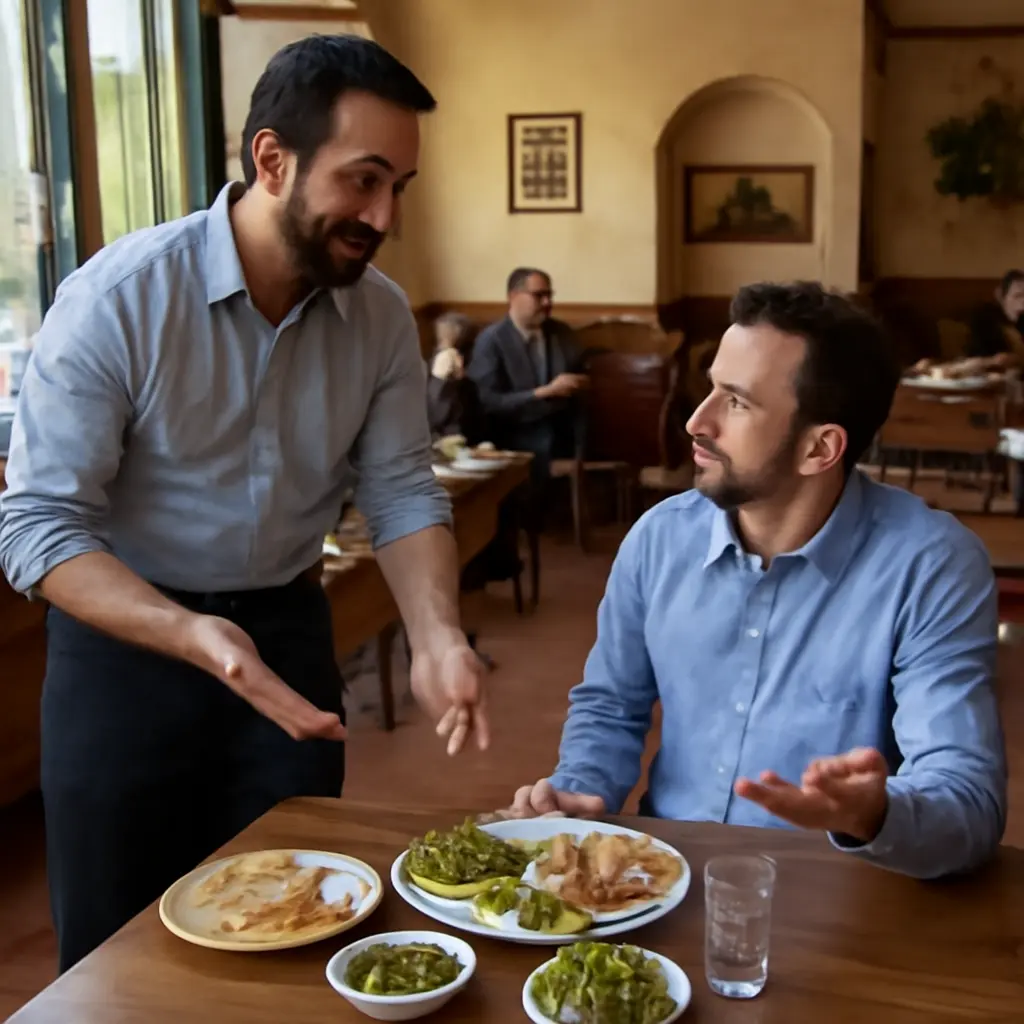
A neighborhood Lebanese restaurant is more than a place to order a meal: it is a small stage for hospitality, shared plates, and local routine. The unspoken rules are simple—greet the staff, order with the table in mind, let mezze arrive at its own pace, and ask when you are unsure. Those habits make sense in a cuisine built around generous sharing: the United Nations Educational, Scientific and Cultural Organization describes the Mediterranean diet as involving shared meals and emphasizes hospitality, conviviality, and cultural traditions. Here is how to read the room, choose a balanced spread, handle bread and dips, and settle the bill without turning dinner into a performance.
Ordering etiquette and the Lebanese shared-table tradition
“Ordering etiquette” here means the practical customs that help guests enjoy a Lebanese meal while respecting the restaurant’s pace and the people sharing the table. It is not a rigid code: restaurants differ, and the best guide is the staff. Lebanese food is often served in a mezze format—small dishes offered for the table—alongside or before larger grilled and stewed dishes. The broader Mediterranean food tradition is recognized by UNESCO as intangible cultural heritage, with communal eating and hospitality among its defining values.
Start with a greeting, then ask how the kitchen serves
A warm hello and a little patience go a long way, especially during a busy lunch or dinner rush. If it is your first visit, ask whether the restaurant recommends ordering several mezze for the group or choosing individual mains. Some places pace small plates as they are ready; others bring much of the order together. Asking early helps the kitchen coordinate the meal and prevents a table from receiving more food than it can comfortably share.
Order for the table, not just for the menu
Mezze are small plates intended to be sampled together, so a useful order balances textures and flavors: a dip such as hummus or moutabal, a fresh salad such as fattoush or tabbouleh, and a cooked or grilled dish. Add more only when the group is still hungry. There is no universal dish count because portions vary by restaurant and party size; ask the server what serves two, what is especially filling, and whether a dish is meant to be shared.
Let the meal arrive in its natural rhythm
A shared meal is not always a synchronized course-by-course event. Mezze may come out in waves, and hot items can arrive when the kitchen is ready. Keep space on the table, pass plates when practical, and avoid treating a brief pause as a service problem. If a dish has not arrived after a reasonable interval, ask politely whether it is still coming. This gives staff a chance to check without creating pressure over a normal difference in preparation time.
Mezze etiquette and the art of sharing
Mezze is a family of small dishes, not one fixed menu. It can include dips, salads, pickles, vegetables, pastries, and grilled items, with the exact selection shaped by the restaurant and region. The social logic is straightforward: everyone gets to taste, and the table makes room for variety. Treat the dishes as communal unless the server or menu indicates otherwise.
Use bread thoughtfully with dips
Pita or other flatbread is a common partner for hummus, baba ghanoush or moutabal, and labneh. Tear off a manageable piece rather than reaching across the table with a whole round of bread. If the group is sharing from one bowl, take a portion onto your plate when utensils are provided, or use a clean piece of bread for each dip. Customs differ from table to table; follow the lead of your companions and the restaurant’s setup.
Build a balanced spread, including dietary needs
A balanced mezze order combines crisp, creamy, fresh, and warm dishes instead of repeating the same style. For example, pair hummus with tabbouleh, add grilled halloumi or falafel, and include a meat dish if the group wants one. Ask about ingredients and preparation when allergies or dietary restrictions matter: hummus commonly contains sesame through tahini, while fried foods may share cooking oil. The U.S. Food and Drug Administration identifies sesame as a major food allergen in the United States, so guests with an allergy should state it clearly and confirm whether cross-contact can be avoided.
Share generously, but leave room for everyone
Hospitality often shows up as generous portions and an offer to try another dish. Accepting a taste is a lovely way to participate, but you do not need to finish everything or accept food that conflicts with your needs. Ask before taking the last piece of a popular shared item, especially when the table has not yet had a chance to try it. If the meal is more than the group can finish, ask whether takeaway containers are available.
Menu choices, service, and paying the bill
Once the table understands the sharing format, the next unwritten rules are about ordering clearly and making the end of the meal easy for staff. Menus may include familiar staples alongside house specialties, and names or recipes can vary. A brief question is usually more useful than guessing from a dish’s name.
Ask about unfamiliar dishes and house specialties
Lebanese menus may feature kibbeh, a family of dishes commonly made with bulgur and meat; manakish, flatbread often topped with za’atar or cheese; and charcoal-grilled kebabs. Recipes and spellings vary, and vegetarian versions exist for some dishes. Ask what is distinctive about the restaurant’s version, whether an item is spicy, and how large the portion is. That gives the server a concrete question to answer and helps you order with confidence.
Be precise about changes and timing
If you need a substitution or have an allergy, explain it when ordering rather than after the food arrives. Keep requests clear and realistic: a necessary dietary accommodation is different from a long list of small alterations. For a group, mention whether you prefer mezze first, whether mains should come together, and whether anyone needs to leave by a certain time. Clear instructions help the restaurant coordinate the order without making service feel like a negotiation.
Handle the check according to the restaurant’s routine
When it is time to pay, ask for the check rather than assuming it will arrive immediately; in many restaurants, staff avoid interrupting a table that is still talking. If splitting the bill, mention that before payment and ask whether separate checks are possible. Tipping norms depend on location, service charges, and local practice, so check the receipt and follow the conventions where you are dining. In the United States, the National Restaurant Association’s industry reporting provides context on the scale of restaurant employment and operations, but it does not establish one universal tipping rule for every venue.
A first-visit example: a simple shared order
For two diners, a practical first order might be hummus, fattoush, one warm mezze such as falafel, and a grilled main to share or two individual mains, depending on appetite. Ask the server whether the portions are generous and whether the kitchen recommends ordering everything at once. If the table is still hungry after the first round, add another dish. This approach reflects the meal’s communal character without assuming that every Lebanese restaurant follows the same service style.
A simple table guide can be summarized this way: greet the staff; ask about portions and pacing; order a mix of dishes; share with consideration; disclose allergies; and check local payment and tipping customs. These are flexible habits, not tests of cultural knowledge.
Conclusion: hospitality is the rule behind the rules
The unspoken rules of a neighborhood Lebanese spot begin with hospitality and shared eating. Mezze works best when the table orders collaboratively, lets dishes arrive at a comfortable pace, and makes room for everyone to taste. Asking about unfamiliar food, stating dietary needs clearly, and following the restaurant’s lead are more valuable than memorizing a supposed etiquette code. On your next visit, start with a greeting, choose a few varied plates, and let the staff help shape the meal; for deeper context, explore UNESCO’s material on Mediterranean food traditions and the FDA’s guidance on sesame allergy.
Sources: UNESCO, Mediterranean diet, https://ich.unesco.org/en/RL/mediterranean-diet-00884; U.S. Food and Drug Administration, Food Allergies, https://www.fda.gov/food/food-labeling-nutrition/food-allergies; National Restaurant Association, Research and Reports, https://restaurant.org/research-and-media/research/