

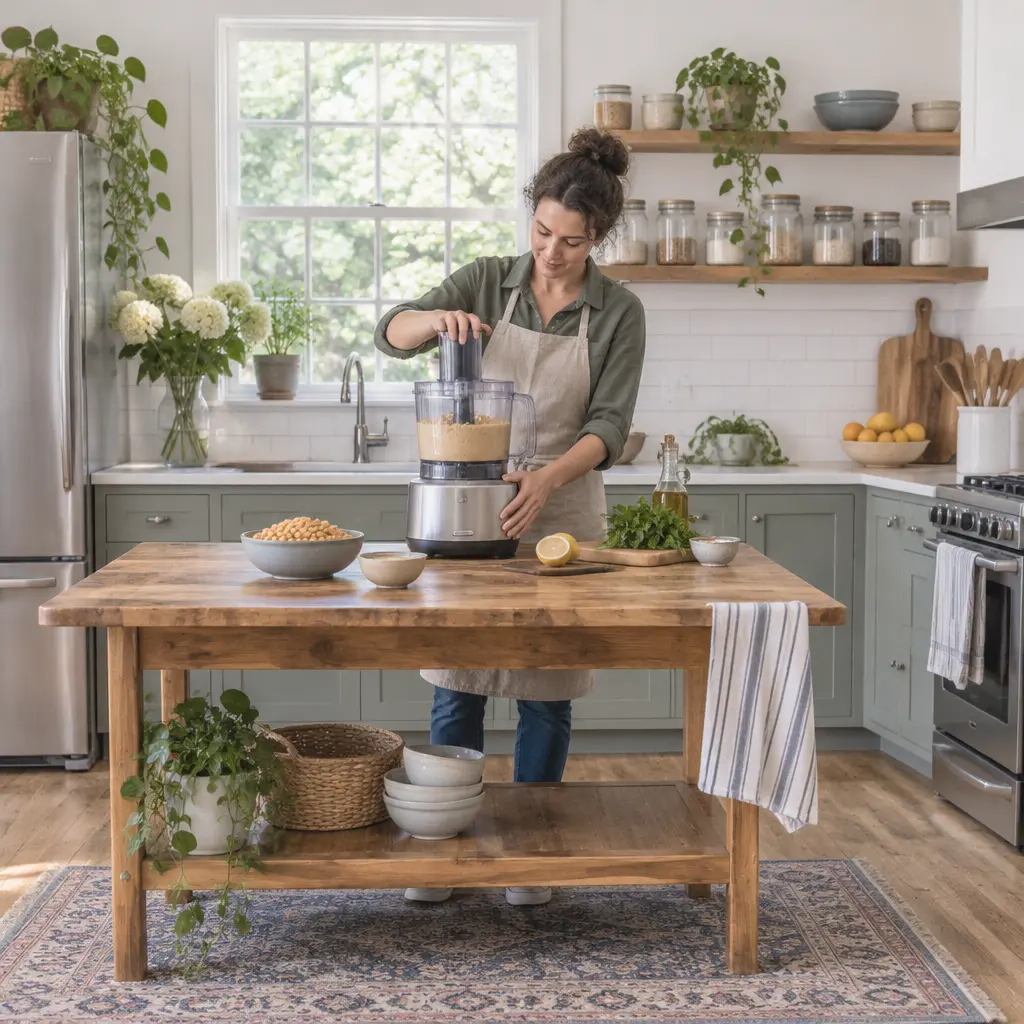
Authentic hummus is a smooth Middle Eastern dip made by blending chickpeas with tahini, lemon juice, garlic, salt, and water or cooking liquid. For a classic version, cook dried chickpeas until very tender, blend the ingredients until creamy, and adjust the acidity and texture to taste. The method reflects hummus’s simple, plant-based foundation: chickpeas supply protein and fiber, while tahini adds sesame flavor and richness. Below are the defining ingredients, a reliable from-scratch method, texture tips, serving ideas, and food-safety guidance.
Authentic Hummus Ingredients and Definition
Hummus, whose name comes from the Arabic word for chickpeas, is a chickpea-and-tahini preparation associated with cuisines across the Middle East and eastern Mediterranean. The Culinary Institute of America describes hummus as a purée commonly made from chickpeas, tahini, lemon, and garlic. Recipes and preferred proportions vary by household and region, so “authentic” is better understood as respecting the dish’s traditional core ingredients and preparation rather than insisting on one universal formula.
Chickpeas are legumes and are also sold as garbanzo beans. The U.S. Department of Agriculture’s FoodData Central lists cooked chickpeas as a source of plant protein and dietary fiber; exact values depend on the product and serving size. This makes hummus a flavorful way to include legumes, but its nutritional profile changes with the amount of tahini, oil, and salt added.
Core ingredients and their roles
Each ingredient contributes to hummus’s characteristic balance. Chickpeas provide body, tahini contributes toasted sesame flavor and a creamy texture, lemon juice supplies acidity, and garlic brings pungency. Salt sharpens the flavors, while cold water or reserved cooking liquid helps the ingredients blend smoothly.
- 1 cup dried chickpeas, or about 3 cups cooked chickpeas
- ½ cup tahini, stirred thoroughly before measuring
- ¼ cup fresh lemon juice, plus more to taste
- 1 small garlic clove, peeled
- ¾ teaspoon fine salt, or to taste
- ¼ to ½ cup ice-cold water or chickpea cooking liquid
- Extra-virgin olive oil, paprika, or whole chickpeas for serving, if desired
Traditional variations
The basic chickpea-and-tahini mixture has many related forms. Some cooks use more lemon or garlic; others favor a denser, richer sesame flavor. Hummus may be served plain or topped with olive oil, whole chickpeas, herbs, or spices. These additions are serving variations rather than requirements for the foundational preparation.
How to Make Hummus from Scratch
The central technique is to cook chickpeas until exceptionally tender, then process them with tahini and seasonings until the mixture is smooth. Soaking is useful but not essential if you have enough cooking time. The National Center for Home Food Preservation advises following tested guidance when preserving foods; homemade hummus is not shelf-stable and should be refrigerated.
1. Soak and cook the chickpeas
Rinse the dried chickpeas and remove any debris. Cover them generously with cold water and soak overnight, about 8 to 12 hours. Drain and transfer them to a pot with fresh water. Bring to a boil, then simmer until the chickpeas are very soft and easily crush between your fingers, usually 60 to 90 minutes after soaking. Cooking time varies with chickpea age and variety. Add water as needed to keep them covered, and reserve some cooking liquid before draining.
2. Blend the tahini, lemon, and garlic
Put the tahini, lemon juice, garlic, and salt in a food processor. Blend until combined. Add cold water a tablespoon at a time until the mixture looks pale and creamy. This initial blending distributes the strong flavors before the chickpeas are added.
3. Add chickpeas and process until smooth
Add the warm, well-drained chickpeas and process for several minutes, stopping to scrape down the bowl. Gradually add cold water or reserved cooking liquid until the hummus reaches your preferred consistency. Taste and adjust with more lemon, salt, or tahini. For a silkier result, continue blending; a short blend leaves a more rustic texture.
4. Serve and store safely
Spoon the hummus into a shallow bowl, make a small swirl with the back of a spoon, and add olive oil or a garnish if desired. Serve with warm pita, vegetables, or other accompaniments. Refrigerate leftovers promptly in a covered container. The U.S. Food and Drug Administration’s consumer food-safety guidance recommends keeping perishable food at 40°F (4°C) or below and not leaving it at room temperature for more than two hours, or one hour when the temperature is above 90°F (32°C).
Texture, Flavor, and Troubleshooting
Hummus texture depends on chickpea tenderness, the ratio of tahini to chickpeas, and the amount of liquid added. The following adjustments help preserve the traditional flavor while correcting common problems.
For smoother hummus
Cook chickpeas until fully tender and blend longer than seems necessary, adding cold water gradually. If the hummus is too thick, thin it a spoonful at a time. If it becomes too loose, blend in additional chickpeas or tahini. Peeling chickpeas can make the texture especially refined, but it is optional and time-consuming.
For balanced flavor
Taste only after blending, because the flavors become more evenly distributed during processing. Add lemon gradually for brightness, salt in small pinches, or tahini for a deeper sesame character. If raw garlic tastes too sharp, use less or let the blended hummus rest briefly before serving.
A simple ingredient comparison
The table below summarizes the practical effect of each core ingredient. It is a preparation guide, not a nutritional analysis.
| Ingredient | Main contribution | Adjustment cue |
|---|---|---|
| Chickpeas | Body and legume flavor | Cook longer if they remain firm |
| Tahini | Sesame richness and creaminess | Add more for a fuller sesame taste |
| Lemon juice | Fresh acidity | Add in small amounts for brightness |
| Cold water or cooking liquid | A looser, smoother blend | Add gradually to avoid thinning too far |
Conclusion: A Reliable From-Scratch Hummus Method
Authentic hummus begins with chickpeas, tahini, lemon, garlic, and salt, brought together through careful cooking and thorough blending. Soaking dried chickpeas, cooking them until very tender, and adjusting the mixture gradually are the keys to a smooth, balanced dip. Make a batch, taste as you go, and explore regional serving styles while keeping the core preparation in view. For further guidance, consult the cited culinary, nutrition, and food-safety resources.
Sources: Culinary Institute of America, The New Book of Soups, https://www.ciachef.edu/; U.S. Department of Agriculture, FoodData Central, Chickpeas (Garbanzo Beans), https://fdc.nal.usda.gov/; National Center for Home Food Preservation, General Information on Canning, https://nchfp.uga.edu/; U.S. Food and Drug Administration, Are You Storing Food Safely?, https://www.fda.gov/consumers/consumer-updates/are-you-storing-food-safely