

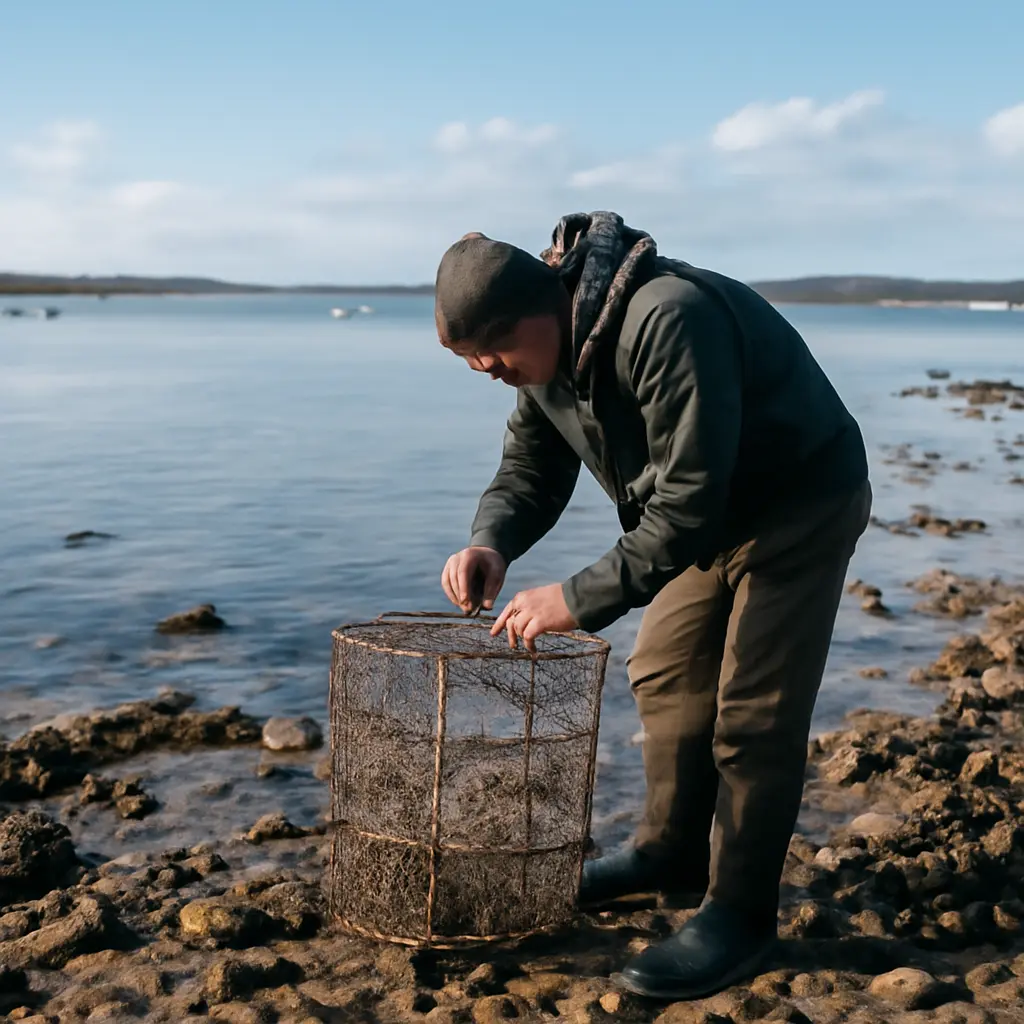
For centuries, coastal communities have used practical, place-based methods to catch fish and other seafood while responding to tides, seasons, weather, and local ecology. These traditional fishing techniques include shore and boat-based nets, traps, hook-and-line fishing, and collective drives; their forms vary widely, and their sustainability depends on how, where, and when they are practiced. The Food and Agriculture Organization of the United Nations (FAO) estimates that small-scale fisheries contribute roughly 40 percent of global capture fisheries, supporting livelihoods and food security for millions. Understanding these methods means looking at their definitions and history, how key techniques work, what makes them selective or risky, and how communities and regulators are adapting them today.
Traditional Coastal Fishing Techniques: Definition and Significance
Traditional coastal fishing techniques are locally developed ways of harvesting fish and other aquatic organisms from nearshore waters, estuaries, beaches, reefs, and tidal zones. The FAO describes small-scale fisheries as diverse activities that can be conducted from shore or small vessels, using a range of gear and often relying on household or community labor. “Traditional” does not mean that a technique is unchanged or automatically sustainable: communities modify gear, timing, and customary rules in response to new materials, markets, regulations, and environmental conditions.
These practices matter because they connect food, employment, cultural knowledge, and coastal stewardship. The FAO’s small-scale fisheries guidance reports that the sector accounts for about 40 percent of global capture-fish production and employs around 90 percent of people working in capture fisheries and post-harvest activities. Estimates vary with definitions and data coverage, but they underline the importance of small-scale fishing to coastal economies. The central challenge is to retain local knowledge and access while preventing overfishing, habitat damage, and avoidable bycatch.
How Traditional Coastal Fishing Techniques Catch Fish
The main techniques differ in how they encounter or attract a catch: nets intercept moving schools, traps exploit animal movement, hooks target fish that take bait or lures, and communal drives guide fish toward a capture area. Fisheries scientist Daniel Pauly and other researchers have emphasized that fishing gear and fishing pressure must be considered together: the same gear can have different ecological effects depending on mesh size, deployment, location, season, and the species targeted. The following categories illustrate the range of methods rather than a single universal coastal tradition.
Shore seines and beach nets
A seine is a net designed to surround fish. In beach seining, fishers set the net from shore or a small boat, then pull its ends toward land, enclosing fish in shallow water. Some communities coordinate the hauling so that many people share the work and catch. Mesh size and the location and season of use influence which fish are retained; undersized mesh can capture juveniles, while careful release practices can reduce unwanted catch. The technique is not inherently low-impact: repeated seining over sensitive nursery grounds can disturb habitat, and local rules often restrict where or when it is permitted.
Gillnets and drift nets
Gillnets are vertical panels of netting in which fish may become caught by the gills, body, or fins as they attempt to swim through. They can be anchored, set near the coast, or allowed to drift, and their mesh is commonly selected for a target size range. Gillnets are efficient, but they can also entangle non-target species, including seabirds, turtles, and marine mammals. The FAO’s fishing-gear guidance and national fisheries agencies therefore stress appropriate mesh, marking, tending, and retrieval; lost or abandoned nets can continue catching animals, a form of “ghost fishing.”
Fish traps, pots, and weirs
Traps and pots capture animals that enter an enclosure, often through a funnel-shaped entrance, while weirs use fences or barriers to guide fish into a holding area as tides rise or fall. They are used for species such as crabs, lobsters, and fish, with designs adapted to local shorelines and tidal cycles. Because many traps can be checked and the catch released alive, they may allow greater selectivity than some entangling gears. Escape gaps, biodegradable panels, and limits on trap numbers help reduce the retention of undersized catch and the impacts of lost gear.
Hook-and-line fishing
Hook-and-line fishing uses bait or artificial lures attached to one or more hooks, from shore, a small boat, or a handline. It can target particular species and sizes, and fishers can release unwanted catch promptly. However, hooks may injure released fish, and baited hooks can catch non-target animals. Handling fish gently, minimizing time out of water, choosing suitable hooks, and following size and seasonal rules improve the chance that released fish survive. Handlines and simple rods remain common in many coastal communities because they require relatively little equipment.
Tidal gathering and communal drives
Some coastal harvests rely on tidal knowledge and collective action rather than mobile gear. Fishers may guide schools toward shallow enclosures, while shellfish and other invertebrates are gathered from exposed intertidal areas at low tide. Such practices depend on detailed understanding of tides, seasons, animal behavior, and safe access to the shore. They can be governed by customary access rules and shared labor, but harvesting still needs limits where stocks are depleted or habitats are vulnerable. Local monitoring and respect for protected areas are essential to keeping these practices viable.
What Makes a Traditional Technique Sustainable?
No fishing method is sustainable in every context. Sustainability depends on whether harvest rates allow populations to replenish, whether the gear avoids excessive bycatch and habitat damage, and whether rules are followed and communities can participate in decisions. The FAO Code of Conduct for Responsible Fisheries calls for responsible fishing practices, protection of aquatic ecosystems, and attention to the needs of small-scale fishing communities. These principles translate into practical choices about gear, seasons, locations, catch limits, and monitoring.
Selectivity, bycatch, and habitat effects
Selectivity is the degree to which fishing gear catches the intended species and sizes while allowing other animals to escape. Mesh dimensions, hook type, trap entrances, escape panels, and the time gear remains in the water all affect selectivity. The FAO’s gear-management materials identify unwanted catch and lost gear as issues that can be reduced through design improvements and responsible deployment. Local assessments should also consider seabed and shoreline habitats: a gear that is relatively selective in one setting may still damage sensitive habitat in another.
Seasonal knowledge and community rules
Traditional ecological knowledge includes observations about spawning periods, migrations, tides, weather, and changes in local abundance. Such knowledge can complement scientific surveys, especially where long-term monitoring is limited, but it should be documented and evaluated alongside biological evidence. Seasonal closures, customary access agreements, protected nursery areas, and community catch monitoring can help align fishing effort with the reproductive cycles of target species. Their effectiveness depends on fair enforcement and meaningful participation by the people who fish.
Modern Challenges and Coastal Examples
Traditional techniques now operate amid changing markets, coastal development, warming seas, and shifting species distributions. The Intergovernmental Panel on Climate Change (IPCC) reports that ocean warming and other climate-related changes affect marine ecosystems and fisheries, though impacts differ by region and species. This creates practical uncertainty for fishers whose customary seasonal indicators may no longer align as reliably with fish movements. At the same time, regulations and competition for coastal space can restrict access to traditional fishing grounds.
Community-based fisheries offer examples of how local practice and formal management can work together. In the Philippines, the FAO’s small-scale fisheries work highlights the importance of recognizing customary institutions and involving fishing communities in management. In many regions, co-management arrangements combine local observation and rules with government oversight, data collection, and conservation measures. Results depend on local conditions; there is no single model that guarantees recovery, but inclusive governance can improve compliance and ensure that management reflects both ecological evidence and livelihood needs.
Conclusion: Keeping Coastal Fishing Knowledge Alive
Traditional coastal techniques—from seines, gillnets, traps, and handlines to tidal gathering and communal drives—show how communities have adapted fishing to local waters over generations. Their importance is both cultural and economic: small-scale fisheries make a substantial contribution to global capture production and provide work across fishing and post-harvest activities. Yet tradition alone does not guarantee sustainability. Selective gear, sound seasonal rules, habitat protection, reliable monitoring, and fair community participation are central to maintaining fish stocks and livelihoods.
Readers can learn more by consulting FAO guidance on small-scale fisheries and responsible fishing, national fisheries regulations, and local knowledge held by fishing communities. Supporting traceable seafood, respecting seasonal and size restrictions, and sharing observations about changing coastal ecosystems can help keep these practices viable for future generations.
Sources: Food and Agriculture Organization of the United Nations, Illuminating Hidden Harvests: The Contributions of Small-Scale Fisheries to Sustainable Development, https://www.fao.org/3/cc4576en/cc4576en.pdf; Food and Agriculture Organization of the United Nations, Voluntary Guidelines for Securing Sustainable Small-Scale Fisheries in the Context of Food Security and Poverty Eradication, https://www.fao.org/3/i4356en/I4356EN.pdf; Food and Agriculture Organization of the United Nations, Code of Conduct for Responsible Fisheries, https://www.fao.org/4/v9878e/v9878e00.htm; Food and Agriculture Organization of the United Nations, Fishing Gear and Methods, https://www.fao.org/fishery/en/gears; Intergovernmental Panel on Climate Change, Climate Change 2022: Impacts, Adaptation and Vulnerability, https://www.ipcc.ch/report/ar6/wg2/; Pauly, D., et al., Towards sustainability in world fisheries, Nature, 2002, https://doi.org/10.1038/418689a.