

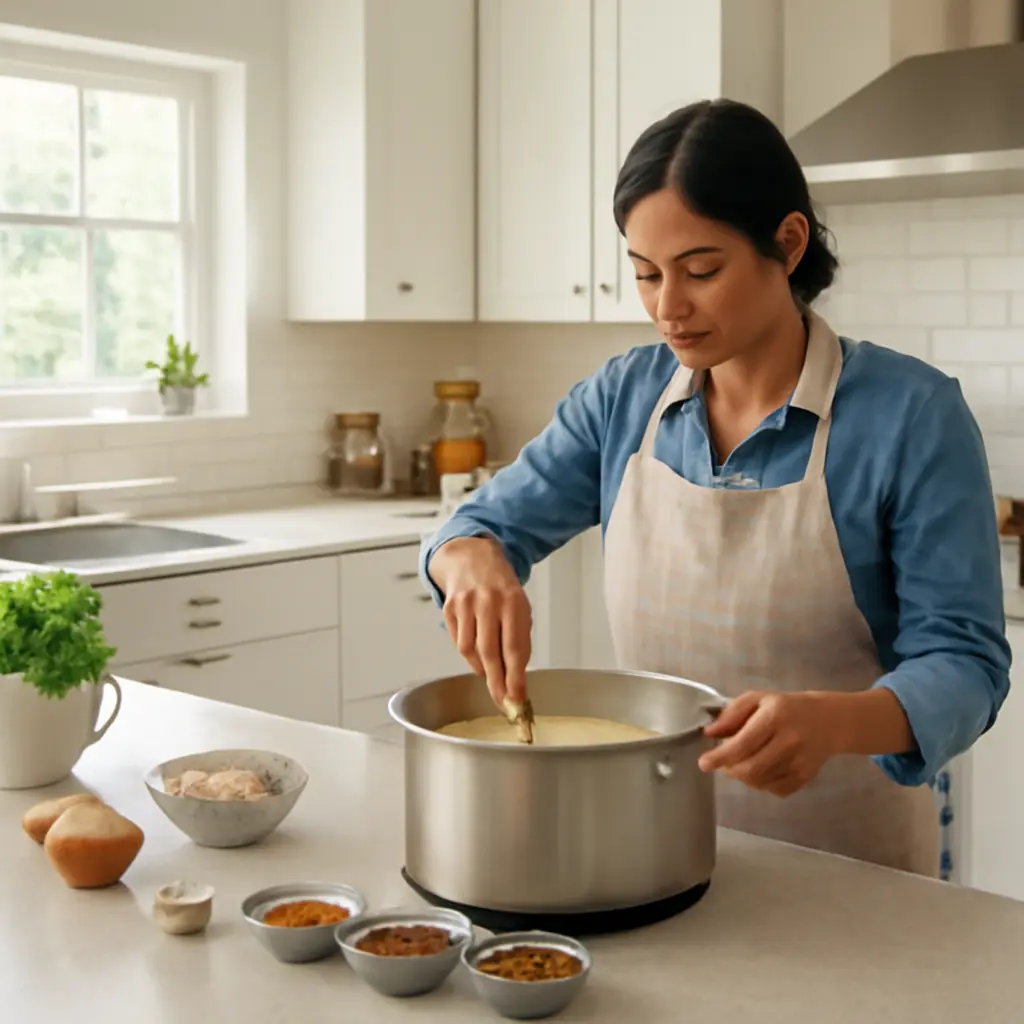
Middle Eastern rice dishes are regional preparations in which rice is cooked with local ingredients, techniques, and seasonings, ranging from Iranian polo and Saudi kabsa to Levantine pilaf. Their spice blends are not one universal mix: they vary with geography, trade, household tradition, and the dish itself. This guide compares the main cooking methods and regional examples, explains how characteristic spices shape flavor, and offers practical guidance for interpreting recipes. Rice is a globally important staple—the Food and Agriculture Organization reports that it provides about one-fifth of the world’s dietary energy—making its local transformations both culturally meaningful and widely relevant.
Regional rice dishes express Middle Eastern culinary geography
“Middle Eastern rice dishes” is a broad culinary category, not a single standardized cuisine. Food historian Claudia Roden, whose work documents the region’s Jewish and Arab food traditions, describes cooking as shaped by local ingredients, historical exchange, and family practice. Rice recipes accordingly differ across the Levant, the Arabian Peninsula, Iran, Iraq, and neighboring communities. Shared techniques—such as seasoning cooking liquid, layering rice with other ingredients, or serving rice with meat—connect them, while distinctive spice combinations mark regional and household identities.
The Food and Agriculture Organization identifies rice as a staple crop and a major source of human dietary energy. That global importance helps explain why rice adapts so readily to local cuisines: a widely cultivated grain can take on the flavors of regional fats, aromatics, meats, dried fruits, and spices. The examples below are representative rather than exhaustive; names and recipes vary by place, family, and occasion.
Pilaf and polo: seasoned rice cooked by absorption
Pilaf is a method in which rice is commonly sautéed in fat, combined with seasoned liquid, and cooked until the grains absorb the liquid. The name and details vary across cuisines. Iranian polo is often associated with carefully prepared, separate grains and may be layered with herbs, meat, vegetables, or fruit. In parts of the Levant, rice pilaf may be cooked with vermicelli and served as a side dish. These are related preparations, not identical recipes.
Kabsa and mandi: Arabian Peninsula rice with meat
Kabsa is a family of Saudi and broader Arabian Peninsula rice dishes in which rice is cooked with meat and a seasoned broth. Its flavor may draw on black lime, cardamom, cloves, cinnamon, pepper, and other spices, with recipes differing across households. Mandi, associated especially with Yemen and now widely enjoyed in the Gulf, is known for meat cooked using a traditional pit or oven technique and served with fragrant rice. The distinction lies not only in seasoning but also in cooking method and the relationship between meat juices and rice.
Mansaf rice: a Jordanian dish centered on hospitality
Jordanian mansaf pairs lamb and rice with jameed, a dried, fermented dairy product traditionally made from sheep’s or goat’s milk. Rice is the grain base, but the dish’s characteristic flavor comes primarily from the tangy dairy sauce and lamb rather than from a single fixed spice blend. The Jordan Tourism Board presents mansaf as a signature national dish and an expression of hospitality. It illustrates why regional rice dishes should be understood as complete food traditions, not merely as rice plus seasoning.
Regional spice blends distinguish Middle Eastern rice dishes
A spice blend is a combination of dried spices and aromatics used to establish a dish’s flavor profile. There is no authoritative, region-wide definition of a single “Middle Eastern rice blend.” Culinary references such as Roden’s regional cookbooks document mixtures that differ by recipe and community. A recognizable pattern may combine warm spices—such as cinnamon, cloves, and cardamom—with pepper, cumin, coriander, turmeric, or dried lime, but no one recipe requires all of them.
Trade routes historically moved spices and other ingredients across the Middle East, Indian Ocean, and Mediterranean, while local agriculture and cooking customs shaped how they were used. As a result, spice names alone do not determine a dish’s identity. Ratios, whole-versus-ground preparation, cooking fat, broth, and the timing of seasoning all affect the finished rice. The following regional patterns provide useful orientation, not rigid rules.
Iranian seasoning: saffron, herbs, and aromatic layering
Iranian rice cookery often emphasizes fragrance, distinct grains, and contrasts in texture. Saffron, prized for its aroma and color, may be steeped and used to finish or garnish rice; herbs, barberries, dried fruits, and nuts appear in particular polo variations. The flavor profile is therefore not simply a dry spice mixture. Technique matters: parboiling and finishing rice by steaming can produce a different texture from cooking it entirely by absorption. Roden’s accounts of Persian cooking and specialist Iranian cookbooks document the variety of rice dishes and their household adaptations.
Levantine seasoning: allspice, cinnamon, and everyday pilaf
Levantine rice dishes often use a restrained combination of warm spices, with allspice, cinnamon, black pepper, and sometimes cardamom appearing in meat-and-rice preparations. Rice cooked with vermicelli is a familiar accompaniment in several Levantine food traditions, while dishes such as Palestinian maqluba layer rice with vegetables and meat before being turned out for serving. Maqluba’s seasoning varies; the defining feature is its layered, inverted presentation rather than one fixed blend. This provides a useful contrast with Gulf dishes where dried lime and a broader aromatic mix may be more prominent.
Gulf and Saudi seasoning: black lime and warm whole spices
In Gulf-style rice preparations, dried black lime, also called loomi, can add a sour, citrus-like depth to meat broth. Cardamom, cloves, cinnamon, and black pepper may contribute warmth and aroma; turmeric or tomato can add color and additional flavor in some recipes. Kabsa recipes differ substantially, so a prepared kabsa mix is a convenience rather than a definitive regional standard. For a home version, whole spices can be simmered in the broth and removed before serving, or ground spices can be measured carefully to avoid overwhelming the rice.
Iraqi and neighboring traditions: shared ingredients, distinct dishes
Iraqi rice cooking reflects overlapping regional influences while retaining distinctive dishes and preparations. Rice may accompany stews, be cooked with vermicelli, or appear in elaborate dishes with meat, nuts, and dried fruit. Baharat, a general term for mixed spices in several Arabic-speaking cuisines, can include pepper, coriander, cumin, cinnamon, cloves, and other ingredients, but the formula is not uniform. Because the same blend name may refer to different mixtures, recipes are best interpreted by their ingredient lists and local context rather than by the label alone.
Cooking technique determines how spices flavor rice
Spice selection is only one part of flavor. The cooking sequence determines whether aromatics infuse the fat, broth, meat, or grains directly. A useful comparison is to think of pilaf as a grain-centered absorption method, kabsa as rice cooked in a seasoned meat preparation, and mandi as a dish whose distinctive meat-cooking method contributes to the rice served alongside it. These categories overlap in practice, but they help explain why similar spices can produce different results.
Blooming spices in fat
Blooming means briefly heating spices in oil, butter, or ghee to release fat-soluble aromatic compounds. It can deepen the flavor of cumin, coriander, or ground spice mixtures before liquid is added. Whole spices such as cardamom pods, cloves, and cinnamon sticks may instead be toasted lightly or simmered in broth. Heat should be moderate: burnt spices become bitter and can dominate a mild grain such as rice.
Seasoning the broth and balancing intensity
When rice absorbs cooking liquid, the broth is a primary source of seasoning. Taste it before adding the rice, taking care to account for salt that may already be present in stock or meat. Dried lime, tomato, yogurt, or jameed can contribute acidity, while cinnamon and cardamom add warmth. Balancing these elements matters more than adding every spice associated with a region. Strong spices are best introduced gradually, particularly when using a packaged blend with an unknown ratio.
Rice variety, rinsing, and texture
Long-grain rice, including basmati, is common in many celebratory and aromatic preparations, though local preferences vary. Rinsing removes loose surface starch and can help keep grains distinct; soaking and parboiling are used in some methods to support even cooking. Follow the recipe’s instructions because water ratios depend on the grain, pot, and technique. A technically successful spice blend cannot compensate for rice that is overcooked, under-seasoned, or cooked with too much liquid.
A practical guide to choosing and using regional blends
Home cooks can use regional examples as starting points while avoiding the idea that one blend is authentic for every dish. Choose seasoning according to the rice method, the accompanying protein, and the desired balance of fragrance, acidity, and warmth. The table summarizes common associations; it is a guide to tendencies, not a definitive recipe or a claim that every household uses the same ingredients.
| Dish or tradition | Common flavor cues | Technique or serving context |
|---|---|---|
| Iranian polo | Saffron, herbs, barberries, or dried fruit, depending on the variation | Often steamed or layered; served as a composed rice dish |
| Levantine pilaf | Allspice, cinnamon, pepper; sometimes cardamom | May be cooked with vermicelli or served with stews and meat |
| Saudi or Gulf kabsa | Black lime, cardamom, cloves, cinnamon, pepper; recipes vary | Rice is cooked with seasoned broth and commonly served with meat |
| Yemeni mandi | Aromatic spices adapted to the meat and rice preparation | Traditionally associated with pit or oven-cooked meat served with rice |
| Jordanian mansaf | Lamb and tangy jameed sauce are central; seasoning varies | A communal celebratory dish served over rice |
For a simple comparison at home, prepare plain rice and two small batches of seasoned broth: one with cinnamon, allspice, and pepper; another with cardamom, cloves, and a piece of dried lime. Cook equal portions of the same rice in each broth, then compare aroma and acidity. This small kitchen test makes clear how regional flavor associations emerge from combinations and proportions rather than from a single “Middle Eastern” spice.
Conclusion: regional context makes rice and spice meaningful
Middle Eastern rice dishes range from Iranian polo and Levantine pilaf to Gulf kabsa, Yemeni mandi, and Jordanian mansaf. Their differences arise from more than spice lists: grain preparation, broth, meat, dairy, cooking equipment, serving style, and local history all matter. Regional spice patterns—including saffron and herbs, Levantine warm spices, and Gulf black lime with aromatic whole spices—are useful guides, but household variation is fundamental.
To explore the subject further, compare recipes from cooks who identify their regional or family traditions, and note how each recipe treats rice, liquid, and seasoning. Doing so preserves culinary nuance while making these dishes accessible to curious cooks.
Sources: Food and Agriculture Organization of the United Nations, Rice and human nutrition, https://www.fao.org/rice2004/en/f-sheet/factsheet3.pdf; Claudia Roden, The New Book of Middle Eastern Food, Knopf, 2000, https://www.penguinrandomhouse.com/books/186448/the-new-book-of-middle-eastern-food-by-claudia-roden/; Jordan Tourism Board, Jordanian Cuisine, https://international.visitjordan.com/page/17/Jordanian-Cuisine; Encyclopaedia Iranica, Rice, https://iranicaonline.org/articles/rice-i; Encyclopaedia Britannica, Pilaf, https://www.britannica.com/topic/pilaf.